
Deep Tissue Laser Therapy for Sports Injuries: What to Expect
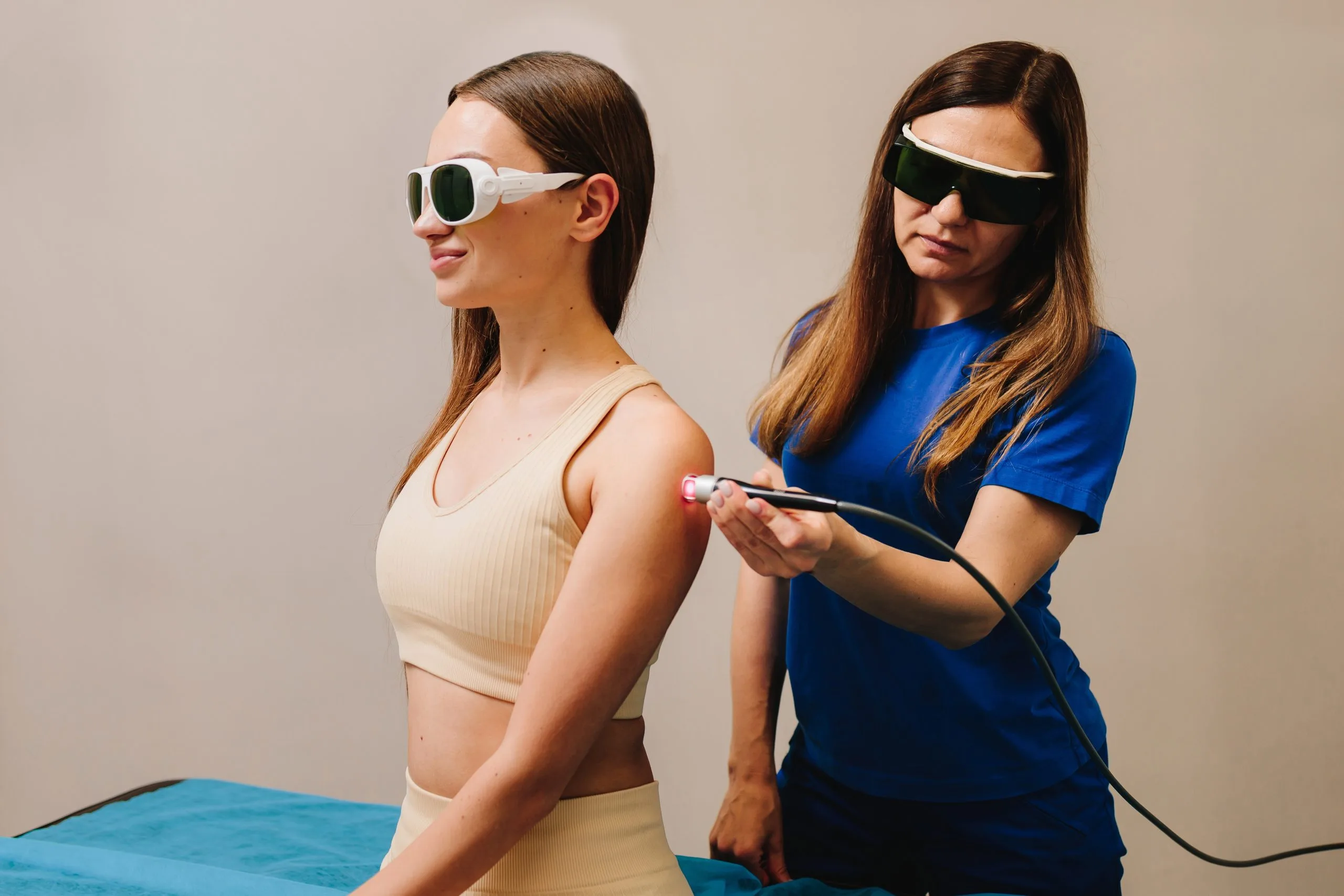
If you’re dealing with a strained hamstring, an aching shoulder, or tendon pain that won’t settle down, deep tissue laser therapy is a comfortable 5- to 10-minute treatment where a handheld laser head glides over your skin, producing a gentle warming sensation – no needles, no medication, and no downtime afterward. Most athletes walk out and return to their day immediately, and many notice less pain within the first few visits.
At Orlando Spine Studio, deep tissue laser therapy is delivered with the LightForce® XLi Therapy Laser, which can be used alongside chiropractic care, physiotherapy, and diagnostic imaging to get athletes back to training.
How Deep Tissue Laser Therapy Works
Mechanism of Action
The process is called photobiomodulation. Light energy at specific wavelengths passes through the skin and is absorbed by cells in the underlying muscles, ligaments, and tendons – particularly the mitochondria, the parts of the cell that produce energy.
Our Class IV laser operates at higher power than the low-level “cold” lasers many clinics use. That extra power means deeper penetration and more tissue coverage in less time, which matters when treating a thick muscle group like the glutes, quadriceps, or lumbar paraspinals.
The laser does not cut, burn, or damage tissue. It stimulates.
Increased ATP Production
ATP is the fuel your cells run on, and injured cells are energy-starved – one reason healing stalls out.
When mitochondria absorb laser energy, ATP production increases. Cells suddenly have more fuel for repair work: rebuilding damaged muscle fibers, clearing cellular debris, and restoring normal function.
Enhanced Blood Flow
Laser therapy triggers vasodilation – the widening of small blood vessels – and encourages the formation of new capillaries over time.
Better circulation delivers more oxygen-rich blood and nutrients to injured tissue while flushing out inflammatory byproducts and waste. This is especially important for tendons and ligaments, which naturally have poor blood supply and heal slowly. Achilles tendon injuries and rotator cuff injuries fall into this category – part of why they linger for months without targeted treatment.
Reduced Inflammation
Inflammation is useful for a few days after an injury. Beyond that, it becomes the problem: swelling compresses nerves, limits motion, and keeps pain signals firing.
Laser therapy stabilizes cell membranes, inhibits inflammatory mediators, and supports lymphatic drainage of excess fluid. Athletes often report the treated area feels looser and less “full” after a session.
Increased Collagen Production
Collagen is the structural protein that gives tendons, ligaments, muscle tissue, and scar tissue their strength. Laser therapy stimulates fibroblasts, the cells that manufacture collagen.
Tissue that heals with well-organized collagen is stronger and more flexible than tissue that heals with disorganized scar tissue – meaning a lower chance of re-injuring the same spot when you return to full training.
Benefits of Deep Tissue Laser Therapy for Athletes
Pain Relief and Healing
Pain relief comes from reduced inflammation, decreased nerve sensitivity, and the release of the body’s own endorphins. Healing comes from the cellular changes above – addressing the underlying damage for lasting results, with cumulative improvement over a series of visits. The laser head simply contacts your skin.
For athletes who want to avoid cortisone injections, surgery, or prescription pain medication, this is a meaningful advantage. It also pairs well with chiropractic care, physiotherapy, and shockwave therapy in the same treatment plan.
Brief Treatment Sessions
A typical treatment area takes 5 to 10 minutes, depending on the size and severity of the injury. Larger areas or multiple sites may take slightly longer, but you’re rarely on the table more than 15 minutes for the laser portion of your visit. That’s realistic for people with jobs, training schedules, and families. A laser visit fits into a lunch break.
No Downtime Required
You can drive yourself home, go back to work, or head to practice. There’s no post-treatment restriction period, no bandaging, and no recovery window. Your provider may adjust your training load based on the injury itself, but the laser treatment adds no limitation of its own.
What to Expect During Deep Tissue Laser Therapy
Initial Assessment and Treatment Preparation
Everything starts with an accurate diagnosis. The in-person consultation includes a hands-on examination, movement and orthopedic testing, and a review of how the injury happened.
When more information is needed, high-quality digital X-ray and diagnostic MSK ultrasound are available on site. MSK ultrasound is particularly valuable for sports injuries because it shows soft tissue in real time – you can see a tendon move, spot a tear, and identify exactly where inflammation sits. That precision determines where the laser is aimed and how much energy is used.
Before treatment, you’ll be brought to a private room and asked to expose the area, since the laser needs direct skin contact. You and your provider will both wear protective eyewear.
The Laser Therapy Session
You’ll lie or sit comfortably while your provider moves the laser head slowly and continuously over the treatment area – sometimes in a sweeping pattern, sometimes with focused pressure on a specific trigger point.
The sensation is a deep, spreading warmth, similar to a warm stone massage. It should never be uncomfortable. Tell your provider if the heat builds too much, and the power or movement speed will be adjusted immediately.
Because the laser head stays in motion, treatment also creates a mild massage effect. Many patients find the session genuinely relaxing.
Post-Treatment Activities and Care
Get dressed and resume normal activity right away – there are no restrictions. Drinking water helps, since improved circulation and lymphatic flow are moving fluid and waste through the area. Some people feel immediate relief after the first treatment. Others notice improvement a few hours later or the next morning.
Effectiveness of Deep Tissue Laser Therapy for Sports Injuries
Effectiveness comes down to depth and dose. Class IV lasers reach tissue that lower-powered devices cannot, and they deliver enough energy in a short session to create a real cellular response.
The other factor is accuracy. Aiming a laser at the general area of pain is far less effective than aiming it at the specific injured structure – which is why diagnostic imaging matters, and why the same technology that confirms your diagnosis also guides your treatment.
Unlike oral medications that carry side effects and only mask symptoms, laser therapy addresses the root cause from within, contributing to a more complete, stable recovery and reducing the likelihood of recurrence.
Conclusion
Deep tissue laser therapy for sports injuries comes down to a short, comfortable, drug-free session that supports your body’s own repair process – no needles, no recovery time, and steady improvement across a treatment series. Combined with accurate diagnosis and the right supporting care from our team, it gives active people a practical path back to peak performance.
To learn what deep tissue laser therapy can do for your specific injury, schedule an in-person consultation at Orlando Spine Studio.
Call 407-658-6500

About the Author
Dr. James Bowles, DC
August 18, 2026