Shockwave Therapy vs Laser Therapy: Which Is Best?
When it comes to treating chronic pain and soft tissue injuries, shockwave therapy and Class IV laser therapy are two of the most effective non-invasive options available. While both treatments are designed to relieve pain and promote healing, they work in very different ways. Shockwave therapy uses acoustic waves to stimulate repair in damaged tissue, while Class IV laser therapy uses high-intensity light to reduce inflammation and accelerate healing at the cellular level.
At Orlando Spine Studio, we believe in using the right tool for the right condition, which is why we offer both treatments.
What Is Shockwave Therapy?
Extracorporeal Shockwave Therapy (ESWT) is a non-surgical treatment that delivers targeted, high-energy acoustic pulses into injured tissue to treat chronic pain and musculoskeletal conditions. The term “shockwave” sounds intense, but it’s a controlled application of energy that jump-starts your body’s natural repair process in areas where healing has stalled.
How Shockwave Therapy Works
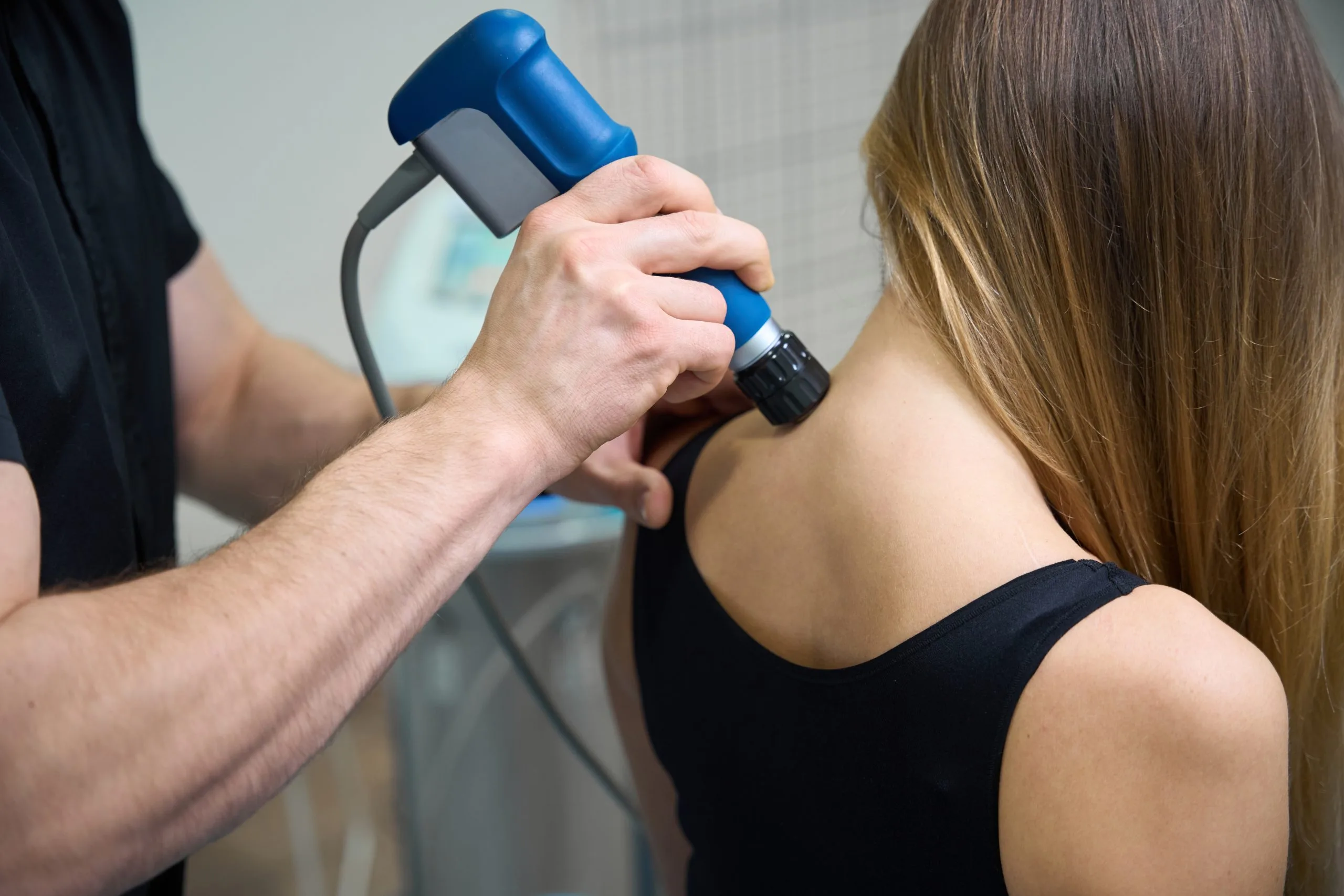
A handheld applicator sends high-energy sound waves through the skin and into the targeted tissue. This process accomplishes several things:
Stimulates Angiogenesis: Micro-ruptures in the tissue’s capillaries trigger new blood vessel formation, bringing more oxygen and nutrients to the area.
Breaks Down Scar Tissue: Helps break up disorganized scar tissue and calcium deposits that impede movement and cause pain.
Releases Growth Factors: Stimulates proteins critical to cell growth and tissue regeneration.
Reduces Chronic Inflammation: Helps resolve the persistent, low-grade inflammation that characterizes many long-standing injuries.
Because shockwave reaches deeper structures, it’s often used when other treatments haven’t fully solved the problem.
Common Conditions Treated
Plantar fasciitis and heel spurs (chronic heel pain)
Achilles tendinopathy
Tennis elbow and golfer’s elbow
Jumper’s knee (patellar tendinopathy)
Shoulder pain, rotator cuff issues, and calcific tendonitis
Chronic back pain, myofascial pain, and trigger points
Sports injuries that haven’t responded to rest
What Is Laser Therapy?
Laser therapy uses focused light energy to relieve pain, reduce inflammation, and accelerate healing at the cellular level. It’s a painless, non-invasive modality, delivered at Orlando Spine Studio with the Class IV deep tissue laser – specifically the LightForce® XLi Therapy Laser.
Types of Laser Therapy: Low-Level vs. Class IV
Low-Level Laser Therapy (LLLT), or “cold laser,” uses very low power, works mostly on surface-level tissue, and often requires longer treatment times. Our Class IV laser delivers significantly higher power output, allowing light energy to penetrate deeper into muscles, ligaments, and joints and treat a larger area in less time – key to effectively treating deep musculoskeletal pain.
How Laser Therapy Works
Class IV laser therapy works through photobiomodulation. Photons penetrate the skin and are absorbed by the mitochondria of injured cells, triggering a cascade of beneficial effects:
Increased ATP Production: Boosts the primary cellular fuel source, giving damaged cells the energy to repair faster.
Reduced Inflammation: Decreases inflammatory markers, rapidly reducing swelling and pain.
Improved Circulation: Enhances blood flow so tissues receive needed oxygen and nutrients.
Pain Relief: Blocks pain signals to the brain and stimulates the release of endorphins.
Many patients describe a soothing, gentle warmth during treatment, and there’s no downtime afterward.
Conditions Treated
Arthritis and joint inflammation
Acute sports injuries (sprains and strains)
Neck and back pain
Sciatica, neuropathy, and nerve-related pain
Carpal tunnel syndrome
Knee and shoulder pain
Post-injury swelling and inflammation
Shockwave Therapy vs Laser Therapy: Key Differences
While both promote healing, their methods and ideal applications differ significantly.
Mechanism of Action
Shockwave Therapy: Mechanical. Uses acoustic energy to create controlled micro-injury, essentially restarting a stalled healing process, and is effective for breaking up adhesions and calcifications.
Laser Therapy: Photochemical. Uses light energy to stimulate cellular metabolism and reduce inflammation without tissue damage – a biological boost that helps cells heal themselves.
Treatment Experience
Shockwave Therapy: Patients feel a strong tapping or pulsing sensation, with some discomfort possible over sensitive or inflamed areas. Intensity is adjusted to tolerance, and sessions are short – often just 5–10 minutes.
Laser Therapy: Painless, with a gentle, soothing warmth. Sessions are quick and efficient. If comfort is a priority, laser is the gentler option.
Recovery and Results
Shockwave Therapy: Mild soreness for 24–48 hours is common as the healing response kicks in. Results are cumulative, with significant improvement after a series of treatments.
Laser Therapy: No downtime. Many patients experience some pain relief immediately after the first session. Optimal results for chronic conditions typically require a series of treatments.
Chronic conditions may respond better to shockwave, while inflammation and acute pain often respond well to laser.
Advantages and Disadvantages
Benefits of Shockwave Therapy
Highly effective for chronic tendinopathies, deep tissue, and calcific deposits
Breaks down scar tissue and calcium deposits
Stimulates new blood vessel formation
Addresses the root cause of chronic pain for a long-term solution
Non-invasive alternative to injections or surgery
Benefits of Laser Therapy
Painless and comfortable during treatment
Rapid anti-inflammatory and analgesic effects
No significant known side effects
Gentle enough for sensitive or acute injuries
Fast sessions with no downtime
Works well alongside other therapies
Potential Drawbacks and Limitations
Shockwave therapy may not be suitable over major nerves or blood vessels, for patients with certain bleeding disorders, or for fresh, highly inflamed injuries, and the initial discomfort can be a factor for some. Laser therapy, while gentle, may work more gradually on dense, fibrotic scar tissue and often requires several sessions for full benefit. Neither is a one-size-fits-all solution – which is why a proper evaluation matters.
Clinical Evidence and Research
Both modalities are supported by a growing body of research. Shockwave therapy has been widely studied for conditions like plantar fasciitis and tennis elbow, with patients experiencing meaningful pain relief and improved function. Thousands of studies support photobiomodulation (laser therapy) for pain reduction, inflammation control, and tissue healing.
At Orlando Spine Studio, treatment decisions are guided by both research and accurate diagnosis. Using high-quality digital X-ray and diagnostic MSK ultrasound, our board-certified chiropractic physicians can see exactly what’s happening inside your body and match you with the right therapy.
Can Shockwave and Laser Therapy Be Combined?
Yes – and it’s often an incredibly effective strategy. We may use shockwave therapy to break down stubborn scar tissue, then follow with Class IV laser therapy to reduce post-treatment soreness, manage inflammation, and accelerate cellular repair. Combined with services like physiotherapy, chiropractic care, and non-surgical spinal decompression, this layered approach addresses both the symptoms and the root cause of your pain.
Conclusion
Both shockwave therapy and Class IV laser therapy are powerful, non-invasive, drug-free tools for resolving pain and restoring function. Shockwave uses acoustic force to restart healing in deep, chronic, or scar-related injuries, while laser therapy uses light energy to deliver gentle, fast relief for inflammation and acute pain – and the two can often be combined for even better results.
With advanced technology and accurate diagnostics, our team at Orlando Spine Studio can help you find the treatment approach that fits your body and your goals.

About the Author
Dr. James Bowles, DC
July 21, 2026