

For most people with a herniated disc, non-surgical spinal decompression and other conservative care are worth trying first, while surgery is usually reserved for severe nerve problems or pain that does not improve with treatment. Many herniated discs improve without an operation. Surgery remains the right call in specific situations. This article, covers how each option works, how recovery compares, and how to decide which path fits your condition.
Understanding Herniated Discs
What Is a Herniated Disc?
Your spine is a stack of bones called vertebrae. Between each pair sits a rubbery disc that cushions movement. Each disc has a tough outer ring and a soft, gel-like center.

A herniated disc happens when part of that soft center pushes through a weak spot in the outer ring. The bulging material can press on nearby nerves. This pressure often causes:
Low back or neck pain
Pain that travels down the leg or arm
Numbness or tingling
Muscle weakness
When a disc in the lower back presses on the sciatic nerve, the result is often sciatica, with pain running through the buttock and down the leg. Age-related wear, a condition known as degenerative disc disease, can make discs more likely to herniate.
How a Herniated Disc Can Heal Without Surgery
Many herniated discs do improve without surgery. Over time, the body can reabsorb some of the disc material that has pushed out. Inflammation around the nerve can also settle down.
Conservative care supports this process. The goal is to take pressure off the nerve, calm inflammation, and restore healthy movement. For many patients, symptoms ease over a period of weeks to months with the right plan.
What Is Spinal Decompression?
Non-Surgical Spinal Decompression Explained
Non-surgical spinal decompression is a gentle, computer-controlled therapy that stretches the spine in a precise way. It is one of the top services we offer at Orlando Spine Studio. It requires no incisions, no anesthesia, and no hospital stay.
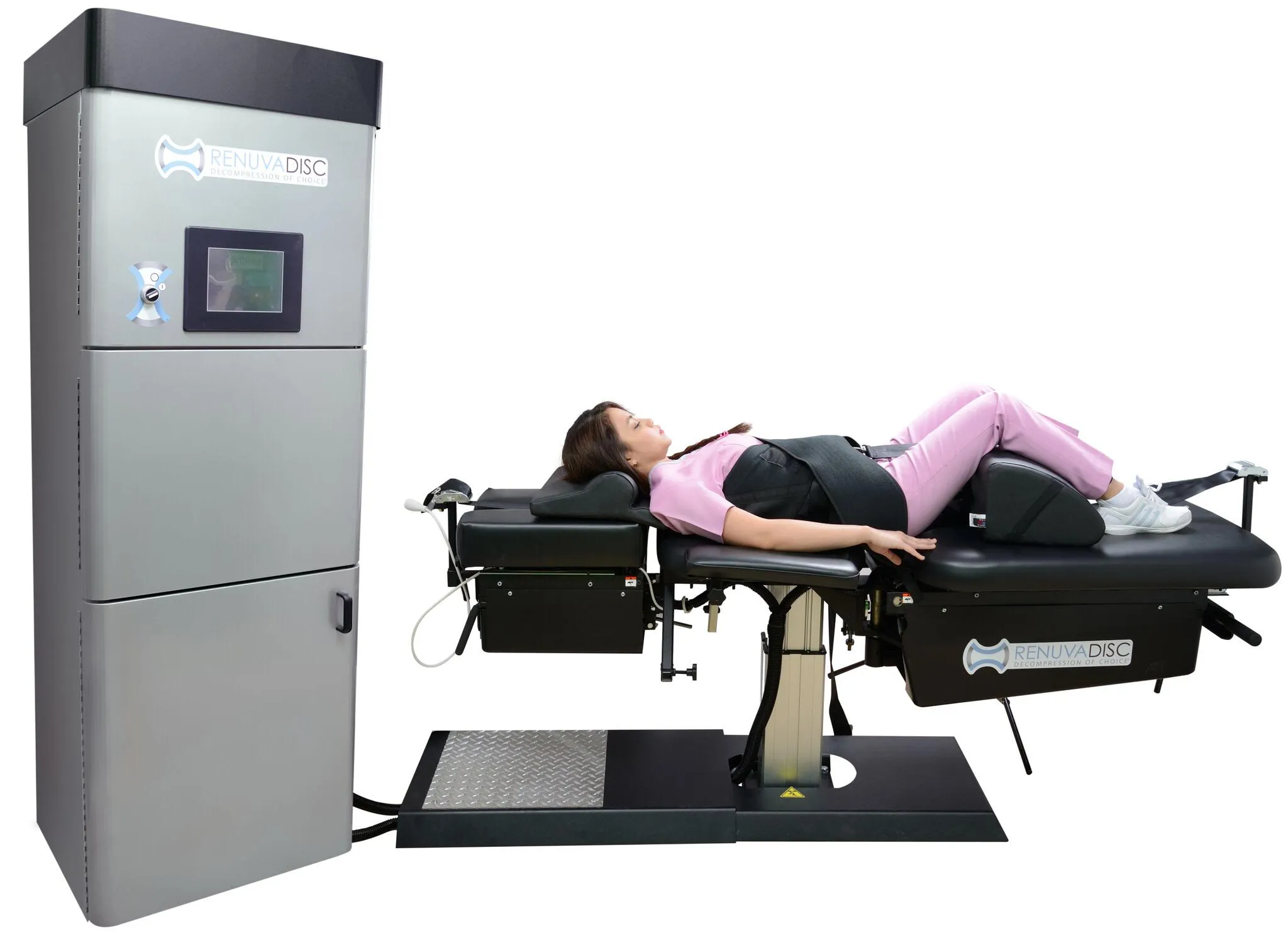
During a session, you rest comfortably on a specialized table while it applies a slow, controlled pull to the targeted area of the spine. The treatment can address discs in the lower back or the neck.
How Spinal Decompression Works
Spinal decompression works by creating space between the vertebrae. That space lowers the pressure inside the disc.
This change in pressure may help in a few ways:
It can draw bulging disc material back toward the center of the disc.
It can take pressure off irritated nerves.
It can encourage water, oxygen, and nutrients to flow into the disc, which supports healing.
The table cycles between pulling and relaxing. This rhythm helps the muscles around the spine stay relaxed so the stretch reaches the disc rather than triggering muscle guarding.
How Long Spinal Decompression Takes to Work
Spinal decompression is a series of treatments, not a one-time fix. Most plans involve multiple sessions spread over several weeks. Some patients notice relief within the first few weeks. Others improve more gradually.
How quickly you respond depends on the size and location of the herniation, how long you have had symptoms, and your overall health. Our team tracks your progress with regular check-ins and adjusts the plan as you improve.
What Is Spine Surgery?
Spine surgery for a herniated disc aims to remove or reduce whatever is pressing on the nerve. Surgery is typically performed by a spine surgeon in a hospital or surgical center.
Common Surgical Procedures for Herniated Discs
Discectomy and Microdiscectomy
A discectomy removes the portion of the disc that is pressing on a nerve. A microdiscectomy has the same goal but uses a smaller incision and magnification. These are the most common surgeries for a herniated disc in the lower back.
Laminectomy
A laminectomy removes part of the bone at the back of a vertebra, called the lamina. This creates more room for the spinal cord and nerves. It is often used when narrowing of the spinal canal adds to nerve pressure.
Spinal Fusion
Spinal fusion joins two or more vertebrae so they heal into one solid bone. It is sometimes recommended when a disc problem comes with spinal instability. Fusion permanently limits motion at the treated level.
Comparing Spinal Decompression and Surgery
Key Differences Between Spinal Decompression and Surgery
The two approaches differ in several important ways:

Invasiveness: Decompression is non-invasive. Surgery involves incisions and anesthesia.
Setting: Decompression takes place in our office. Surgery happens in a hospital or surgical center.
Approach: Decompression relieves pressure and supports the body’s natural healing. Surgery physically removes tissue or changes the structure of the spine.
Permanence: Decompression leaves your anatomy unchanged. Surgical changes, especially fusion, cannot be undone.
Time commitment: Decompression requires a series of visits. Surgery is a single event followed by a longer recovery.
How the Safety of Spinal Decompression Compares to Surgery
Because spinal decompression involves no incisions, no anesthesia, and no changes to your anatomy, it is a far less invasive option. Most patients find the sessions comfortable and relaxing.
That said, decompression is not right for everyone. Certain conditions, such as fractures, advanced osteoporosis, or some spinal implants, may rule it out. A careful exam and imaging help confirm whether decompression is a safe fit for you.
Recovery Time: Spinal Decompression vs. Surgery
Recovery is one of the biggest differences between the two options.
With spinal decompression, there is typically no downtime. Most patients return to work and daily activities the same day as their session.
Surgery requires a recovery period. After a microdiscectomy, many people return to light activity within a few weeks. A spinal fusion often takes several months before a full return to normal activity. Rehabilitation is usually part of the recovery plan after surgery. Depending on your needs, that plan may include chiropractic adjustments, physiotherapy, massage therapy, assisted stretching, or Class IV laser using the LightForce® XLi Therapy Laser to help calm inflammation.
Limitations of Spinal Decompression
Spinal decompression requires a commitment to a series of sessions. Results build over time rather than all at once.
It is also not designed for every spine problem. Severe nerve compression, significant weakness, or certain structural issues may need surgical care. Some patients improve only partly and may need additional treatment.
Potential Benefits of Spine Surgery
For the right patient, surgery can provide fast and direct relief. Removing the disc material that presses on a nerve can ease leg or arm pain quickly. Surgery can also stop nerve damage from getting worse in cases of severe compression. It involves anesthesia, an incision, and a recovery period that can affect work and daily life for weeks or months.
Deciding Between Spinal Decompression and Surgery
When to Consider Non-Surgical Spinal Decompression
Spinal decompression may be a good fit if you have:
A herniated or bulging disc confirmed by an exam and imaging
Back or neck pain that spreads into the leg or arm
Sciatica or a pinched nerve
Symptoms that have not improved with rest alone
A strong preference to avoid surgery if possible
When Spine Surgery Might Be Necessary
Some symptoms point to a need for prompt surgical evaluation. These include:
Loss of bladder or bowel control
Numbness in the groin or inner thighs
Leg or arm weakness that is getting worse
Foot drop, which makes it hard to lift the front of the foot
Severe pain that does not improve after a full course of conservative care
Loss of bladder or bowel control, or numbness in the groin area, needs emergency care right away.
How Spinal Decompression Can Help You Avoid Surgery
For many patients, spinal decompression and related therapies relieve symptoms enough that surgery is never needed. By taking pressure off the nerve and supporting disc healing, conservative care gives the body a chance to recover on its own.
No treatment can promise that outcome. Still, trying a non-invasive approach first leaves surgery available as an option if it becomes necessary.
Why Trying Spinal Decompression Before Surgery Makes Sense
When there are no red-flag symptoms, starting with conservative care is a reasonable first step. Surgery cannot be reversed. Decompression does not change your anatomy, so it does not close the door on other treatments later.
Before starting, an accurate diagnosis matters. At our office, we use digital X-ray and MSK ultrasound imaging to identify the root cause of pain. Dr. James, Chiropractic Physician, DC, explains the findings in plain language and builds a treatment plan around the diagnosis.
Whether Spinal Decompression Is Better Than Surgery
Neither option is better for everyone. Spinal decompression is often the right starting point for patients without severe or worsening nerve symptoms. Surgery is the right choice when nerve damage is advancing or when conservative care has not worked.
The better treatment is the one that matches your diagnosis, your symptoms, and your goals.
Questions to Ask Before Making a Decision
Questions to Ask Before Choosing Spinal Decompression
What does my imaging show about the disc and nerves?
Am I a good candidate for decompression?
How many sessions will my plan likely include?
What other therapies will be part of my care?
How will we measure my progress?
What signs would mean I need a surgical opinion?
Questions to Ask Before Choosing Surgery
Which procedure do you recommend, and why?
Have I tried enough conservative care first?
What will recovery look like for my work and daily life?
What happens if I wait or choose not to have surgery?
Will I need rehabilitation afterward?
Conclusion
Which Treatment Is Right for You
Spinal Decompression vs. Surgery for Herniated Discs comes down to a few key points. Many herniated discs heal without an operation. Non-surgical spinal decompression offers a non-invasive way to relieve nerve pressure with little downtime. Surgery is saved for severe, worsening, or stubborn cases. An accurate diagnosis is the first step toward the right choice.