
What to Expect During Spinal Decompression Therapy
If you’re dealing with persistent back or neck pain, here’s the short answer: at Orlando Spine Studio you’ll lie comfortably on a specialized, computer-controlled motorized table while gentle, precise traction gradually stretches your spine to relieve pressure on discs and nerves. A secure harness wraps around your pelvis and torso, and the system creates negative pressure within targeted discs to ease pain and promote natural healing.
This advanced, non-invasive therapy is a cornerstone of our approach for conditions like chronic back pain, sciatica, and degenerative disc disease — offering relief without surgery. This article walks you through every part of the process so you know exactly what to expect from start to finish.
What Is Spinal Decompression Therapy?
Spinal decompression is a modern, FDA-cleared therapy designed to relieve pressure on the spinal structures that cause pain. It’s a form of motorized traction that gently stretches the spine — but with a level of precision and control older traction methods lack. The primary goal is to create negative intradiscal pressure (a vacuum effect) inside the targeted disc.
At Orlando Spine Studio, it’s one of our top services for patients suffering from:
Bulging or herniated discs
Degenerative disc disease
Sciatica (leg pain)
Pinched nerves
Worn spinal joints (posterior facet syndrome)
Ongoing back pain
By addressing the mechanical compression that’s often the root cause of pain, decompression helps the body begin its own healing. It’s a sought-after, non-invasive option for people who want relief without surgery, injections, or long recovery times.
Dr. James evaluate each patient carefully before recommending decompression. The goal is simple: find the root cause of your pain and target it with the right treatment plan.
How Spinal Decompression Therapy Works
Your spine is made up of vertebrae cushioned by soft discs that act as shock absorbers. Over time — due to injury, posture, or degeneration — discs can become compressed, bulge, or herniate, pressing on nerves and causing pain, tingling, or numbness.
Decompression reverses this process. As the table gently pulls and releases, it creates negative pressure inside the disc, which has two main effects:
Retraction of disc material. The negative pressure can help pull bulging or herniated disc material back toward its proper place, taking pressure off the affected nerve.
Inflow of nutrients. The vacuum effect encourages water, oxygen, and nutrient-rich fluids into the disc. Since discs have limited blood supply, this enhanced circulation is vital for rehydration, repair, and healing.
The technology is key. The computer-controlled system applies specific forces and angles tailored to your condition and continuously monitors your body’s response. It can detect and bypass the body’s natural tendency to guard against stretching (muscle spasms), making subtle real-time adjustments so the pull stays precise, steady, and comfortable — never sudden or forceful.
Decompression often works as part of a complete plan. Many patients also benefit from chiropractic care, physiotherapy, or other treatments that support the spine while it heals.
What to Expect During Spinal Decompression Therapy
Knowing the process from start to finish can ease any nerves before your first visit. Here’s a clear breakdown of the three main stages.
Before Your Session
Your journey begins with an in-person consultation and evaluation with James Bowles or Dr. James. They’ll review your medical history, ask about your symptoms, and perform a detailed physical exam.
For accurate diagnosis, we use in-house digital X-ray to assess spinal alignment and bone structure, and diagnostic MSK ultrasound for a clear, real-time view of soft tissues, discs, and nerves. This step matters because not everyone is a good fit for decompression — pinpointing the source of your pain confirms you’re a suitable candidate and lets us tailor your plan.
There’s little you need to do beforehand. Wear loose, comfortable clothing, and you can usually eat normally. Your provider will explain how the table works and answer any questions before you begin.
During the Session
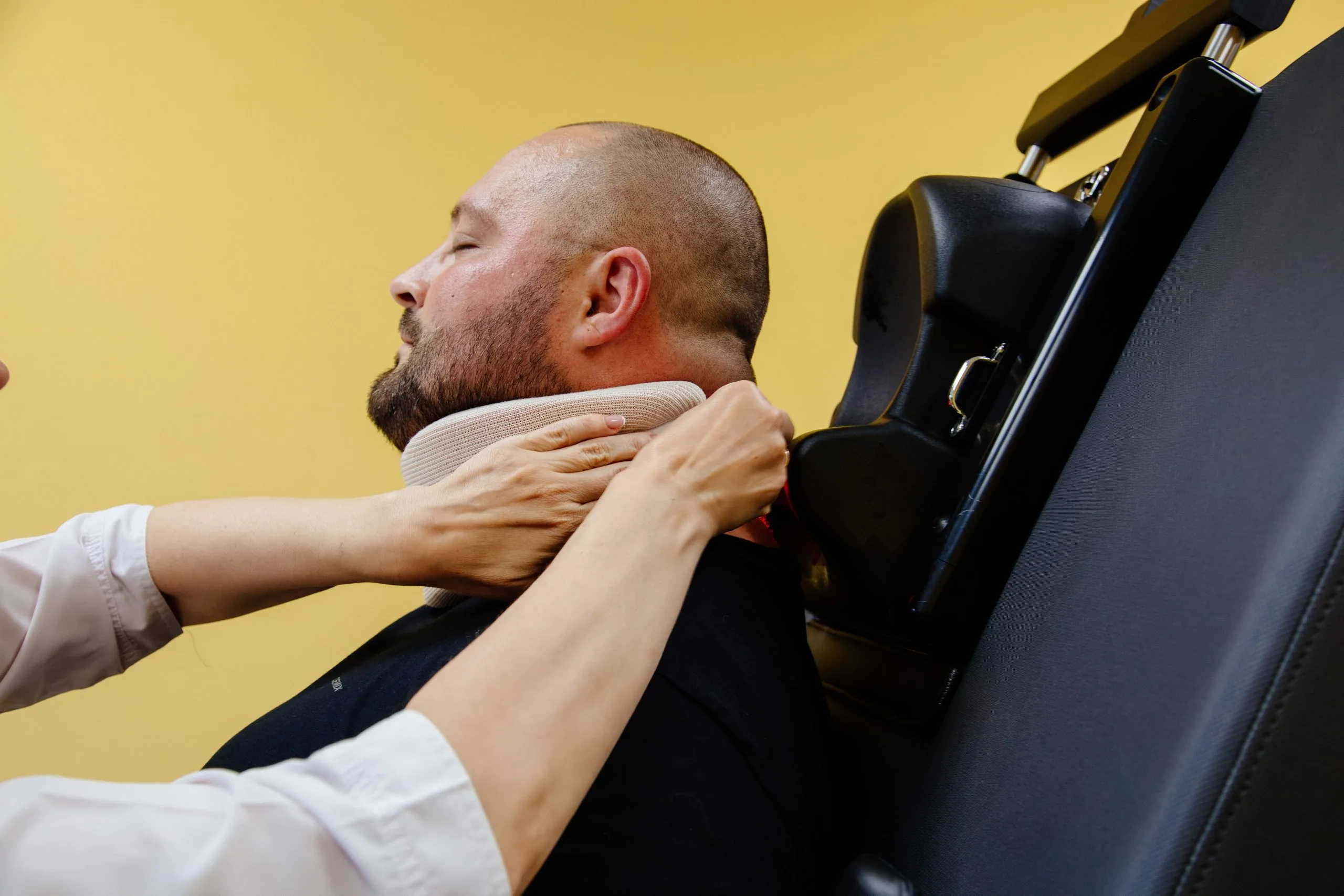
You’ll remain fully clothed and lie down on the padded motorized table — on your back or stomach, depending on whether you’re being treated for neck or lower back pain. Our staff will fit you with a soft, secure harness around your hips and another around your upper body to gently hold you in place.
Once you’re comfortable, your provider programs the system with the precise settings from your plan. The table slowly applies a gentle stretching force, holds it, and releases it in a repeating cycle of stretch and relaxation — the action that relieves pressure on your discs and nerves.
Most patients are surprised by how relaxing it feels. There are no sudden jerks or sharp pulls, just a slow, gentle lengthening sensation — many listen to music, relax completely, or even doze off. You’re always in control and can stop at any time with a patient safety switch, or have the settings adjusted if anything feels uncomfortable. Sessions typically last 20 to 45 minutes, depending on your condition and plan.
After Your Session
The table slowly returns to neutral, and you’ll be asked to move slowly as you get up. One of the biggest benefits of decompression is that there’s no downtime — no surgery, no anesthesia, no recovery period. Most patients return to work, errands, or other activities right away.
Some people feel relief after just a few sessions, while others notice gradual improvement over time. It’s normal to feel a little tired or mildly sore after your first few treatments, similar to light exercise; this fades quickly.
Your provider may offer simple tips to support your progress, such as staying hydrated to help rehydrate the discs, gentle stretching, or movements to avoid. Your plan may also pair decompression with other therapies like assisted stretching or Laser therapy to reduce inflammation and accelerate healing. Decompression works as a series of sessions over several weeks, not a single visit — sticking to the full plan gives you the strongest chance at lasting relief.
Results and Benefits of Spinal Decompression Therapy
Because the treatment addresses the underlying cause of pain — the compressed disc — the results can be lasting. Key benefits include:
Non-surgical and non-invasive. No incisions, needles, or anesthesia — a welcome alternative to injections or surgery.
Targeted pressure relief. Gently stretching the spine takes pressure off discs and nerves, reducing pain, numbness, and tingling — including sciatica symptoms in the legs and feet.
Comfortable and relaxing. The slow, controlled motion is gentle enough that many patients find it soothing.
No downtime. You can return to your normal routine right after each session.
Improved mobility and natural healing. The treatment restores spinal function and encourages water, oxygen, and nutrients to move into the discs to support the body’s own repair.
Decompression can be especially helpful for herniated and bulging discs, sciatica, pinched nerves, and degenerative disc disease — and many patients turn to it after other treatments didn’t bring lasting relief.
Results vary based on your condition, overall health, and how well you follow your plan, which is why a thorough evaluation comes first. Decompression also fits well with other care: someone recovering from an auto injury or a sports injury may combine it with chiropractic adjustments and physiotherapy for a more complete recovery.
Conclusion
Now that you understand what to expect, the process should feel far less mysterious. Spinal decompression is a safe, comfortable, and highly effective non-surgical treatment for back and neck pain caused by disc issues — you’ll start with a careful evaluation, lie comfortably on a computer-controlled table during gentle sessions, and walk out with no downtime.
At Orlando Spine Studio, Dr. James combine advanced diagnostic tools like digital X-ray and MSK ultrasound with a personalized, technology-driven approach to help you find lasting relief — without surgery.
Ready to learn whether decompression is right for you? An in-person consultation is the first step toward feeling better.

About the Author
Dr. James Bowles, DC
June 30, 2026